Solidity
Solidity Smart Contract Development Guide
Understand Solidity contract structure, EVM execution, visibility, events, custom errors, access control, testing, and responsible deployment workflows.
Ketan Kachariya 5 min read
On This Page
Solidity is a contract-oriented language used to describe programs that execute on Ethereum and other EVM-compatible networks. A deployed contract is not a private backend service: its bytecode and state are replicated, its public functions can be called by arbitrary accounts, and each state-changing operation consumes gas. Those constraints change how developers think about validation, storage, upgrades, and failure. This guide focuses on the building blocks needed to create understandable contracts, while treating every example as educational rather than production-ready financial infrastructure.
Solidity and the Ethereum Virtual Machine
The compiler translates Solidity into EVM bytecode plus an ABI that describes callable functions and events. The EVM executes the bytecode deterministically on every validating node. A transaction supplies calldata, gas limits, value, and a sender; execution either commits all resulting state changes or reverts them. Read-only calls are simulated against a selected block and do not create a transaction. The contract cannot make an ordinary outbound HTTP request, read a private database, or schedule itself to run later. External information must arrive through a transaction, often using a carefully designed oracle mechanism.
Structure state and behavior explicitly
A contract normally declares state variables, events, custom errors, modifiers, a constructor, and functions. State variables occupy persistent storage, so their layout and write frequency matter. Functions marked view promise not to modify state; pure functions also avoid reading contract state. public and external functions form the visible interface, while internal and private functions organize implementation. Visibility is not secrecy: private state and bytecode remain observable on a public chain. Use visibility to control Solidity-level access, not to conceal sensitive information.
// SPDX-License-Identifier: MIT
pragma solidity ^0.8.24;

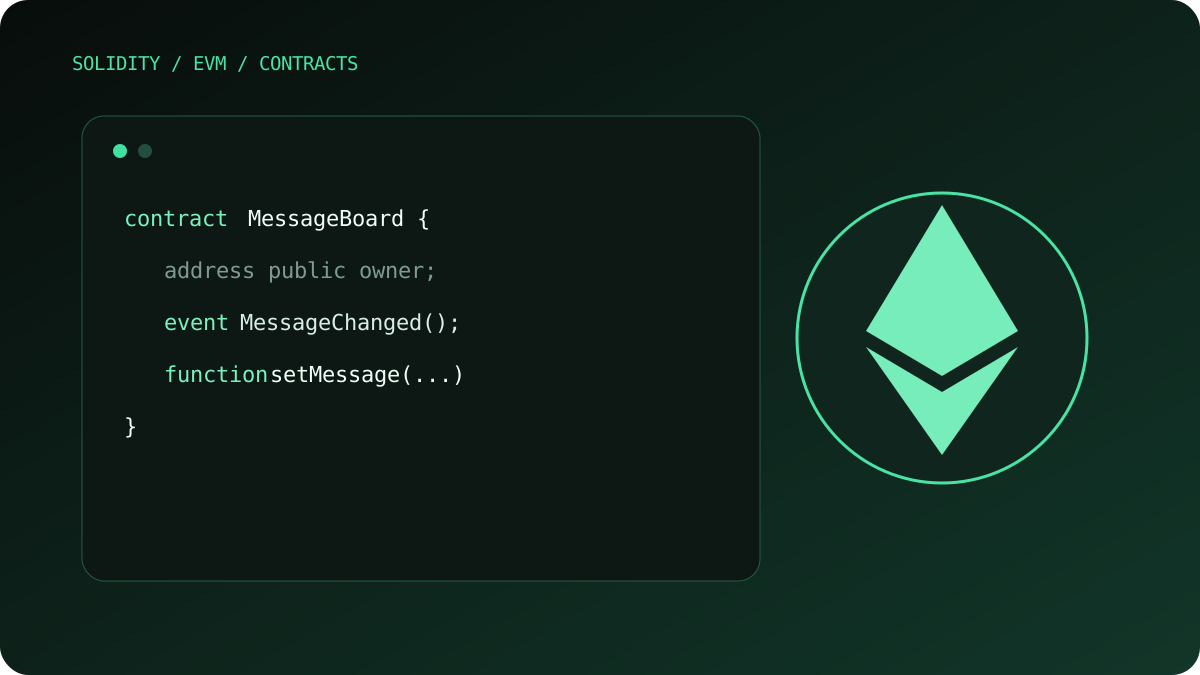
contract MessageBoard {
    error NotOwner();
    error EmptyMessage();

    address public immutable owner;
    string public message;

    event MessageChanged(address indexed editor, string newMessage);

    constructor(string memory initialMessage) {
        owner = msg.sender;
        _setMessage(initialMessage);
    }

    function setMessage(string calldata nextMessage) external {
        if (msg.sender != owner) revert NotOwner();
        _setMessage(nextMessage);
    }

    function _setMessage(string memory nextMessage) internal {
        if (bytes(nextMessage).length == 0) revert EmptyMessage();
        message = nextMessage;
        emit MessageChanged(msg.sender, nextMessage);
    }
}
This demonstration shows a clear owner rule, validation, an immutable value, custom errors, and an event. It does not handle ownership transfer, moderation, upgradeability, or every operational concern. Production requirements should drive a threat model and the use of reviewed libraries rather than encourage copying a small example into a high-value system.
Choose function interfaces with callers in mind
Use external for functions intended to be called from outside the contract, and internal for reusable implementation logic. Keep public state-changing entry points small: validate authorization and inputs, update state, emit the events consumers need, and make external interactions obvious. Modifiers can express repeated checks, but excessive modifier chains hide execution order. Prefer named custom errors over long revert strings when callers need to distinguish expected failure cases. Document units, allowed zero values, and whether a function can receive native currency.
Design events and errors as integration contracts
Events are logs, not contract storage. They help indexers and frontends observe what happened, but contracts cannot query historical logs during execution. Index fields that consumers genuinely need to filter, and include enough context for off-chain systems to rebuild a useful view. Custom errors reduce repeated string data and give clients structured failure selectors. Frontends should still handle unknown failures because an RPC provider, wallet, proxy, or future contract version may return something outside the expected set.
Access control is more than an owner check
Ask who may call each state-changing function, how that authority is granted, whether it can be revoked, and what happens if a key is lost or compromised. A single owner may be acceptable for a prototype but concentrates operational risk. Role-based control, multisignature administration, timelocks, or immutable rules may fit different systems. Never rely on tx.origin for authorization. Separate user permissions from emergency controls, and test negative cases: an unapproved caller, a revoked role, a zero address, and an attempted action during a paused state.
Test invariants and failure paths
Unit tests should cover successful behavior, expected reverts, event arguments, and boundary values. Integration tests should execute the same calls a frontend or deployment system will make. Add fuzz or property-based tests for rules that must hold across many inputs, such as conservation of balances or monotonically increasing counters. Tests do not prove a contract secure, but they make assumptions executable and regressions visible. Static analysis and manual review complement tests by finding patterns the test author did not anticipate.
- Compile with an intentionally selected Solidity version and optimizer configuration.
- Test deployment arguments and post-deployment initialization on a local network.
- Run the deployment process on a test network with the same configuration shape used for production.
- Verify source code and record the chain ID, address, compiler settings, and deployment transaction.
- Use independent security review when the contract controls meaningful value or permissions.
Treat deployment as a reproducible change
A deployment script should be versioned, parameterized, and safe to rerun or resume according to the chosen tool. Keep private keys and provider credentials outside source control. Confirm the deployer, target chain, constructor inputs, predicted dependencies, and available balance before broadcasting. After deployment, verify code, test the public interface, transfer administrative roles deliberately, and update frontend configuration only after the address is confirmed. Smart contract code is difficult to change after release; the deployment checklist is part of development, not an afterthought.
Finally, preserve the build artifacts and configuration that produced the deployed bytecode. Future debugging and verification depend on the exact compiler, optimizer, linked libraries, and constructor arguments—not merely the source file visible in the current branch.
Build small, reviewable contracts
Readable Solidity makes trust boundaries visible. Minimize persistent state, avoid unnecessary external calls, name units and roles clearly, and emit events that support real integrations. Start from a written specification and threat model, then use tests and tooling to challenge the implementation. A concise contract is not automatically safe, but a contract whose behavior can be explained and tested is a much stronger starting point.
Building a Web3 Product?
Need help with a DApp, smart contract integration, wallet connection, or production Web3 architecture? Let's discuss the engineering behind your product.
Discuss Your Web3 ProjectKeep Reading
Related Articles
Blockchain
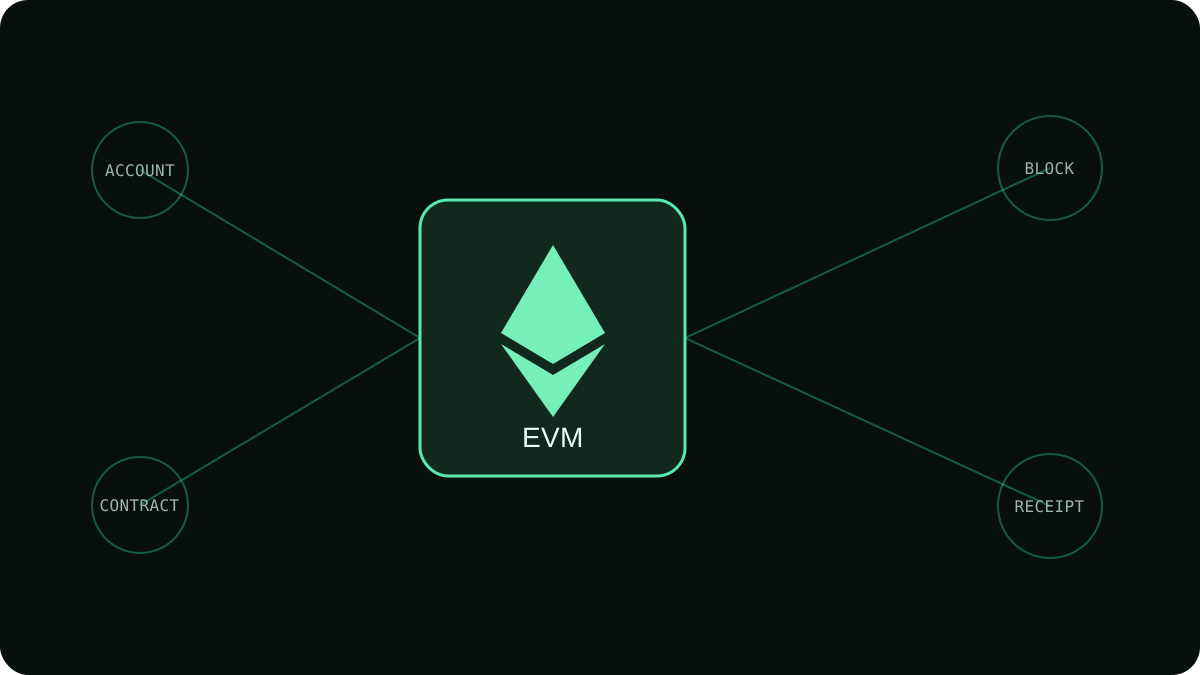
Understanding Ethereum, the EVM, and Smart Contracts
A developer-focused explanation of Ethereum accounts, transactions, EVM execution, gas, RPC access, confirmations, and EVM-compatible networks.
Blockchain Security
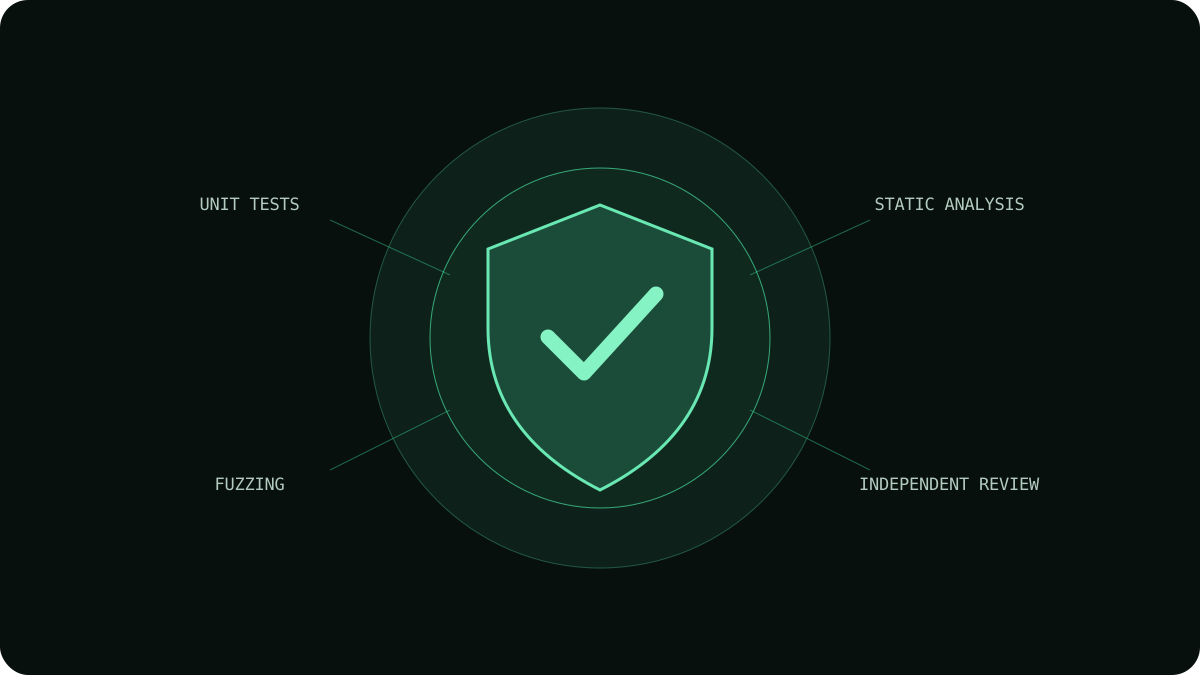
Smart Contract Security and Testing Guide
A defensive engineering guide to access control, reentrancy, external calls, validation, approvals, oracles, test coverage, fuzzing, and independent review.
Web3 Development
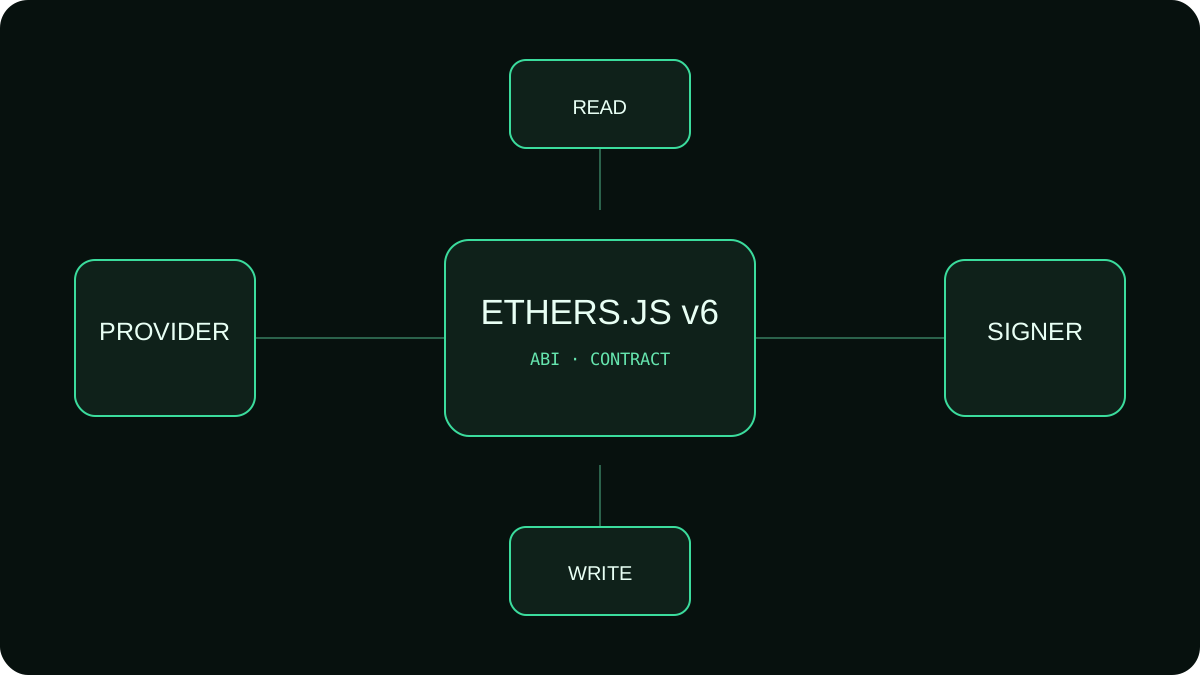
Ethers.js v6 Smart Contract Integration
Use Ethers.js v6 providers, signers, ABIs, contract reads, transaction writes, confirmations, and chain checks without mixing v5 patterns.