Blockchain Security
Smart Contract Security and Testing Guide
A defensive engineering guide to access control, reentrancy, external calls, validation, approvals, oracles, test coverage, fuzzing, and independent review.
Ketan Kachariya 4 min read
On This Page
Smart contract security begins with the system's assumptions, privileges, assets, and failure modes. Tools can find known patterns, but they cannot decide whether an administrator should be able to mint, whether a price source is trustworthy, or whether a paused protocol leaves users trapped. Testing turns intended rules into executable checks; review challenges the rules and implementation. Neither makes a contract hack-proof, and an independent audit should never be represented as a guarantee.
Start with a threat model
List the assets and permissions the system controls, then identify actors and trust boundaries. Include owners, multisignatures, operators, users, external contracts, token implementations, oracles, bridges, relayers, and upgrade administrators. For each privileged action, ask how it is granted, revoked, delayed, monitored, and recovered. Document invariants such as total balances never exceeding reserves or only an authorized role changing a parameter. Tests and reviews become more useful when they target written properties instead of generic coverage percentages.
Prevent access-control mistakes
Every external state-changing function needs an explicit answer to who may call it. Default visibility is not a policy. Test unauthorized accounts, removed roles, zero addresses, repeated initialization, and direct calls to implementation contracts where relevant. Avoid tx.origin authorization. Separate routine operations from emergency powers, and keep the blast radius of each role small. Ownership transfer should be deliberate, observable, and preferably two-step when a mistaken address would be irreversible.
Understand reentrancy and external call risk
An external call hands control to another contract before the original function completes. The recipient may call back into the system and observe partially updated state. Follow checks-effects-interactions where it fits: validate first, update internal accounting, then interact externally. A reentrancy guard can protect a boundary but is not a substitute for reasoning across functions and contracts. Pull-payment patterns and bounded external interactions reduce exposure. Test malicious receiver contracts rather than only friendly accounts.
function withdraw(uint256 amount) external nonReentrant {
    if (balances[msg.sender] < amount) revert InsufficientBalance();

    balances[msg.sender] -= amount; // effect before interaction
    (bool sent, ) = msg.sender.call{value: amount}("");
    if (!sent) revert TransferFailed();
}
This sketch illustrates ordering, not a complete treasury design. Real systems must address accounting invariants, recipient behavior, gas assumptions, pause and recovery policy, and the consequences of a reverted transfer.
Validate inputs, dependencies, and approvals
Validate addresses, ranges, array lengths, deadlines, replay protection, and units at the contract boundary. External price or data sources introduce freshness, manipulation, decimal, and availability assumptions; define acceptable staleness and failure behavior. Token integrations must consider unusual return values, transfer fees, rebasing, callbacks, and allowance races. An approval is durable authority, so applications should request only the necessary scope and contracts should verify the spender and token they expect.
Layer example, property, and integration tests
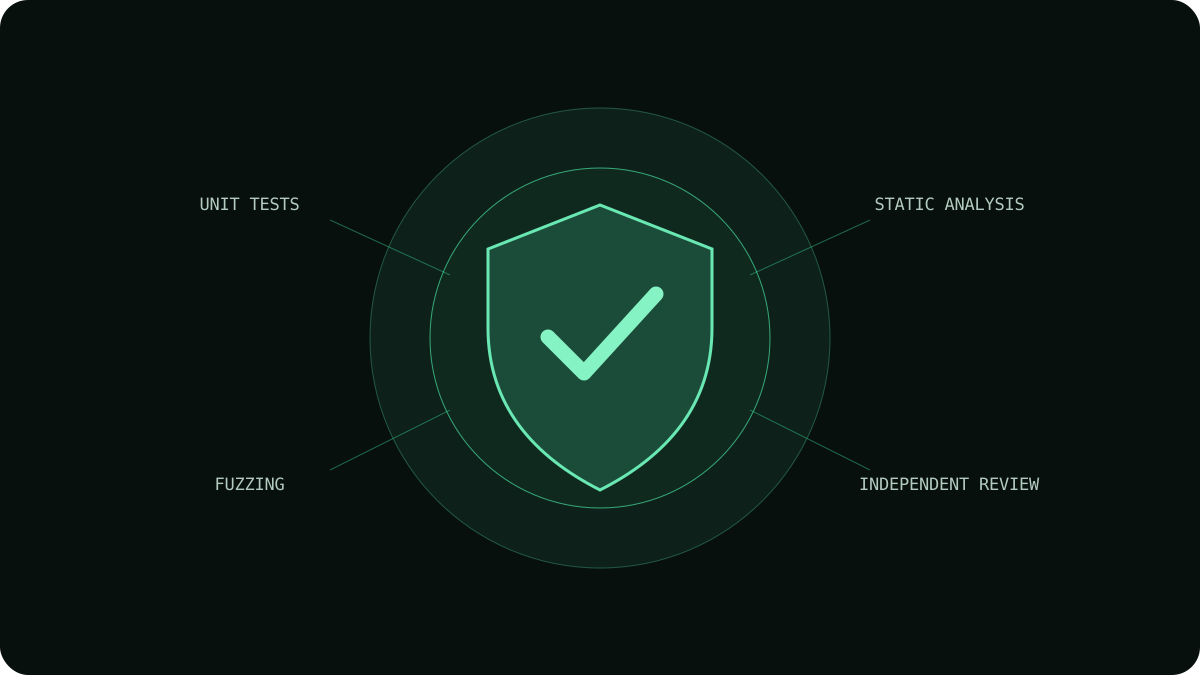
Example tests document specific scenarios and expected events or reverts. Fuzz tests explore many generated inputs. Invariant tests execute sequences of actions while checking properties that must always hold. Integration tests cover proxy setup, role transfers, token behavior, oracle responses, and the same ABI path used by clients. Fork tests can reveal assumptions about deployed dependencies but should pin a block and not replace local deterministic tests. Measure coverage as a map of exercised code, not as proof of meaningful assertions.
- Test every privileged function with both authorized and unauthorized callers.
- Test boundary values, repeated calls, and unexpected call order.
- Assert events and state together when off-chain systems depend on logs.
- Use malicious mocks for callbacks, reentrancy, and nonstandard tokens.
- Run static analysis and review every finding in system context.
- Add regression tests for every confirmed defect.
Use analysis and independent review appropriately
Linters and static analyzers identify patterns, data flow, and suspicious constructs quickly. Symbolic or property-oriented tools can explore paths that examples miss. Manual review checks business logic, privilege, upgrade, and integration assumptions. For contracts controlling significant value or irreversible permissions, independent specialists should review a stable scope with documentation and tests. Resolve findings transparently and retest the final deployed configuration; a report on earlier code does not automatically cover later changes.
Security continues after deployment
Monitor privileged operations, upgrades, pauses, large transfers, and oracle health. Protect operational keys with appropriate custody and separation of duties. Prepare response procedures before an incident, including who can pause, how users are informed, and what recovery is technically possible. Avoid emergency powers that are undocumented or impossible to exercise safely. Deployment parameters, role assignments, and verified source code deserve the same review as Solidity source.
Turn every finding into a durable regression
When review or testing finds a defect, first write the smallest test that demonstrates the unwanted behavior on the vulnerable revision. Apply the fix, keep the regression test, and add a property or invariant when the same class of failure could appear through another entry point. Record whether the issue affected deployed code, configuration, or only an unreleased branch. This creates evidence for future upgrades and prevents a refactor from quietly reintroducing a previously understood risk.
Confidence comes from evidence, not absolutes
Secure engineering reduces risk through simple design, explicit invariants, layered tests, automated analysis, careful operations, and independent challenge. None of those supports a promise that code cannot fail. Communicate scope and residual risk honestly, keep the reviewed surface small, and make every privileged path and external dependency visible to the people responsible for the system.
Building a Web3 Product?
Need help with a DApp, smart contract integration, wallet connection, or production Web3 architecture? Let's discuss the engineering behind your product.
Discuss Your Web3 ProjectKeep Reading
Related Articles
Solidity
Solidity Smart Contract Development Guide
Understand Solidity contract structure, EVM execution, visibility, events, custom errors, access control, testing, and responsible deployment workflows.
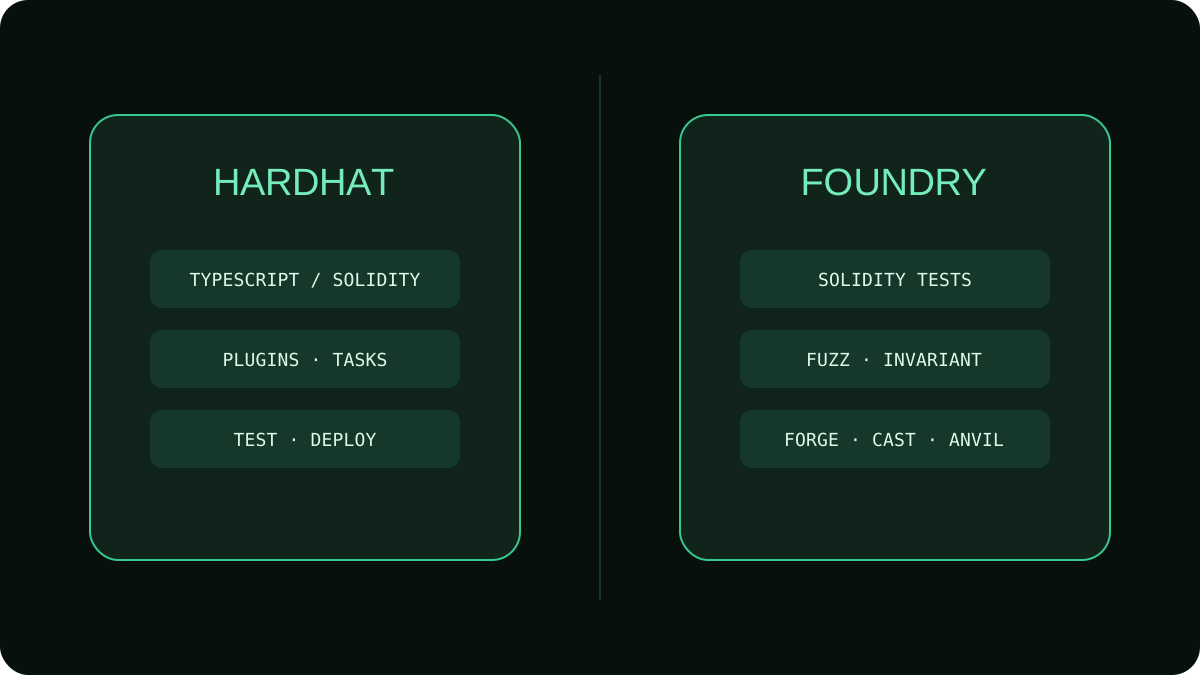
Developer Tools
Hardhat vs Foundry for Smart Contract Development
Compare Hardhat and Foundry across compilation, local testing, deployment, scripting, debugging, and team workflow without relying on fragile version claims.
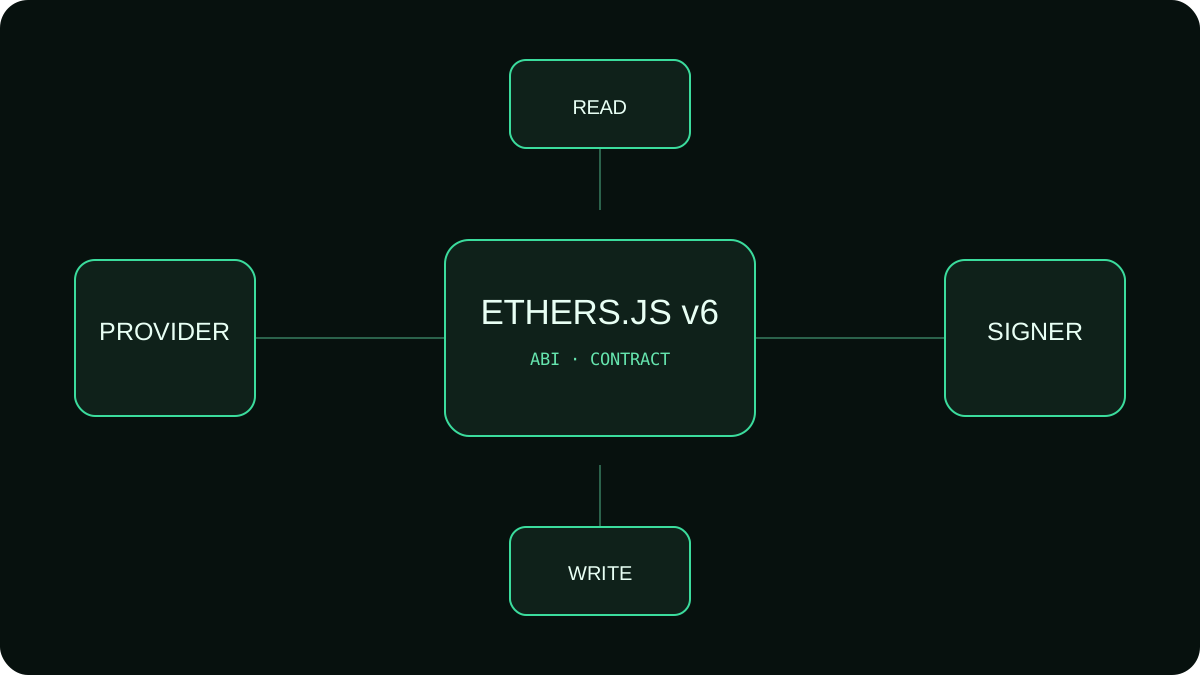
Web3 Development
Ethers.js v6 Smart Contract Integration
Use Ethers.js v6 providers, signers, ABIs, contract reads, transaction writes, confirmations, and chain checks without mixing v5 patterns.